August 2026
This Statement is made under Section 54 of the UK’s Modern Slavery Act 2015 as well as the Australian Modern Slavery Act 2018 (the “Acts”) and sets out the steps that the Norinchukin Bank (“the Bank”) took during its Financial Year 2025 (ending on 31 March 2026) to ensure that slavery and human trafficking does not occur in any of its supply chains or any part of its business. This statement has also been prepared in compliance with the statutory guidance issued by the UK Government (Home Office) in March 2025, taking into account the principles of transparency, effectiveness and continuous improvement. This statement will be reviewed annually for publication after every financial year.
Organisational Structure and Supply Chains
The Bank is a cooperative financial institution for agriculture, forestry and fisheries industries, with its Head Office in Japan. The Bank financially supports the development of these industries and cooperative organisations in Japan. The Bank has created a unique cooperative financing program aimed at providing financial support for the development of these industries, as well as related cooperative organisations.
The operations of the Bank are based in its Head Office and 18 branches throughout Japan, as well as its branches in New York, London and Singapore, and its representative office in Beijing. In addition, as a global hub for investment and lending, Norinchukin Australia Pty Limited, Norinchukin Bank Europe N.V., and Norinchukin Hong Kong Limited are organised as group companies.
As a financial institution, the Bank’s main supply chain comprises external companies such as computer systems suppliers, office suppliers and outsourcing service vendors, as well as relationships with counterparties and customers arising from its investment, loan, and corporate banking activities. The Bank recognises that higher human rights risks may arise in sectors such as agriculture and mining and in certain geographic regions. The Bank continues to prioritise these areas for enhanced due diligence and monitoring. Whilst visibility beyond primary suppliers may be limited in some cases, the Bank is continuously working to improve its understanding of the supply chain and the identification of risks.
Policy
The Bank clearly sets out its commitment to respecting human rights and preventing modern slavery, as described in the policies and procedures below:
- Human Rights Policy
- Environmental Policy
- Code of Conduct, Code of Ethics
- Sector Policies for Investment and Loan
These policies are consistent with the principles of the UN Global Compact, to which the Bank has been a signatory since 2016, and the UN Guiding Principles on Business and Human Rights. The Bank adopts a zero-tolerance stance towards slavery and human trafficking in all forms. The relevant policies are incorporated into business processes such as outsourcing management and investment and loan due diligence, and are reviewed on a regular basis. The Bank expects its counterparties, suppliers, and business partners to uphold equivalent standards in relation to human rights and modern slavery.
Please refer to the following URL for our Code of Ethics, Environmental Policy, Human Rights Policy:
https://www.nochubank.or.jp/en/sustainability/management/policy/
Due Diligence
The Bank identifies and addresses modern slavery risks among its business based on a risk-based approach. The main initiatives are as follows.
- Operation of an Environmental and Social Risk Management (ESRM) framework for investment and loan activities (including ESG integration and application of the Equator Principles)
- Conducting onboarding assessments and, after-onboarding, conducting periodic reviews of outsourcing contractors (with additional checks carried out for high-risk contractors)
- Requiring outsourcing contractors to apply the internal control systems equivalent to the Bank’s own
- Identifying human rights violation risks for all customers through incident checks utilising external vendors, and escalating matters as necessary
These due diligence processes are designed to identify, assess, and mitigate potential modern slavery risks across the Bank’s operations and business relationships. These initiatives also apply to the investment and loan customers of Norinchukin Australia Pty Limited and Norinchukin Bank Europe N.V.
Risk Assessment and Management
The Bank recognises that risks related to modern slavery may arise indirectly through customers, investees or outsourcing contractors, particularly in sectors and regions where human rights risks are inherently high. The Bank adopts a risk-based approach, focusing on sectors, geographies, and transaction types where exposure to modern slavery risks may be higher. Based on the ESRM framework, the Bank is undertaking the following initiatives:
- Identifying sectors and business activities with high environmental and social risks through screening via “Sector policies for Investment and Loans”, and by gathering information on human rights-related incidents involving investees and borrowers.
- When the Bank identifies high risk, it takes appropriate measures, such as engaging in dialogue, monitoring, or taking them into account in our credit decisions
The Bank recognises that the absence of identified cases does not always mean there is no risk, and continues to enhance its risk assessment methodologies. While no confirmed cases of modern slavery were identified during the reporting period, the Bank recognises that such risks may remain present and continues to enhance detection and mitigation efforts.
Evaluation of Effectiveness
The Bank continues to develop key performance indicators to measure the effectiveness of its modern slavery risk management, including:
- Periodic reviews of the ESRM framework, outsourcing management, and incident checks
- Monitoring of compliance with contractual and management requirements of outsourcing contractors
- Monitoring of the implementation status of training (including participation rates)
- Tracking the number of cases identified and escalated in relation to human rights risks
- Utilising advice from external experts and legal specialists as required
From FY2026 onwards, the Bank plans to further strengthen its evaluation framework, including enhanced data tracking and periodic review of its ESRM framework.
Training
The Bank continuously provides training to employees on ethics, compliance and human rights (including the risk of modern slavery). The training is aimed at all employees. In FY2025, the Bank continued to provide environmental and human rights training for all employees(in Japanese). Furthermore, in connection with human rights impact assessments, lectures were delivered by external experts specialising in this field (in Japanese and English). The environmental and human rights training is held annually to support employees for proper understanding of the risks posed by slavery and human trafficking and enable them to assess these risks and perform their due diligence. Furthermore, also in conjunction with the implementation of human rights impact assessments, awareness-raising activities were carried out through lectures by external experts and workshops for relevant divisions and officers. In FY2025, training participation rates were monitored to ensure broad employee coverage, and efforts will continue to enhance both participation and content quality.
Governance, Approval and Future Initiatives
The Bank’s processes include the continuing review of due diligence and training needs and demonstrate the commitment to the principles of the Acts by the Board of Directors and the Bank as a whole. The role of the Compliance Committee established by the Board of Directors is to assess compliance with legislation and regulation including the Acts. This Statement has been duly considered by the Compliance Committee and recommended for approval by the appropriate Executive Officer of the Bank.
The Bank affirms its commitment to taking steps to ensure that slavery and human trafficking are not taking place in its business or supply chains.
Dated: 18th August, 2026
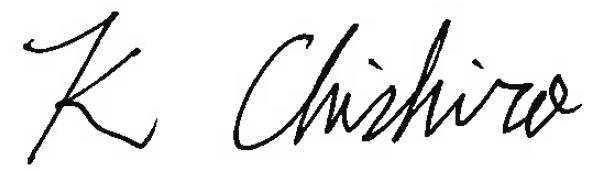
CHISHIRO Koji
Executive Officer(General Manager of Legal Affairs and Compliance Division),
Chief Compliance Officer
The Norinchukin Bank
- Sustainability
- Sustainability Management
- Highlights of Initiatives
- Formulation of Purpose of the Bank and Milestones of Sustainable Management
- Philosophies and Policies
- Sustainability Promotion Structure
- Sustainability Advisory Board
- Important Issues to Achieve Our Purpose
- Stakeholder Engagement
- Participation in Initiatives
- Sustainable Finance
- Initiatives for Creating and Visualizing Impact
- Initiatives to Manage Environmental and Social Risks
- Agriculture, Fishery, Forestry Industries, and Regions
- Environment
- Social
- Governance
- Report/Index