HR system based on concepts of autonomy and expertise
Job Group System
Based on our HR management policy, we have established a personnel system that features the concepts of “autonomy” and “expertise.” As part of this system we have introduced our Job Group System.
Under the Job Group System, employees register themselves in job groups based on their preferences and work experience when they reach the leadership level and, as a general rule, are assigned to work related to their registered job group, enabling them to develop expertise over the medium to long term.
In addition to job rotations based on job groups, we have established Group Job Descriptions that clearly define the roles within each job group and the expertise required for each function and job level. We have also introduced Job Competencies as a framework for assessing and developing professional expertise. Through regular one-on-one meetings, performance evaluations, and feedback sessions with supervisors, we support employees in deepening their expertise and advancing their professional development.
Job Groups

CC: Cooperative Central Banking; GI: Global Investments & Banking; BE: Business Expert
* CC: Operates the Retail Business as the central bank for the JA Bank / JF Marine Bank System; GI&B: Mainly responsible for the investment business; Domestic Branches: Operates Food and Agriculture Business and Retail Business within local communities; BE: Provides support for planning and front-office operations and handles business development, application and optimization
Job Groups and Group Job Descriptions
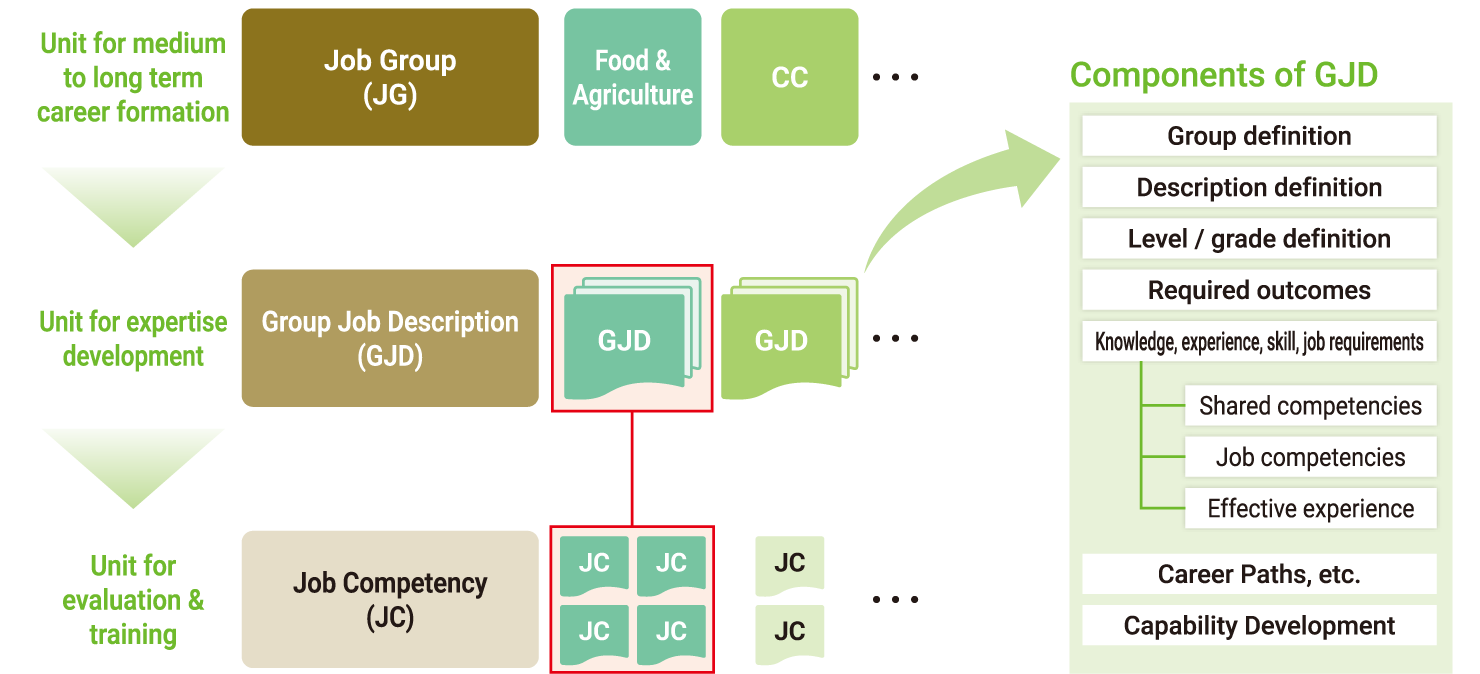
Career formation based on job group
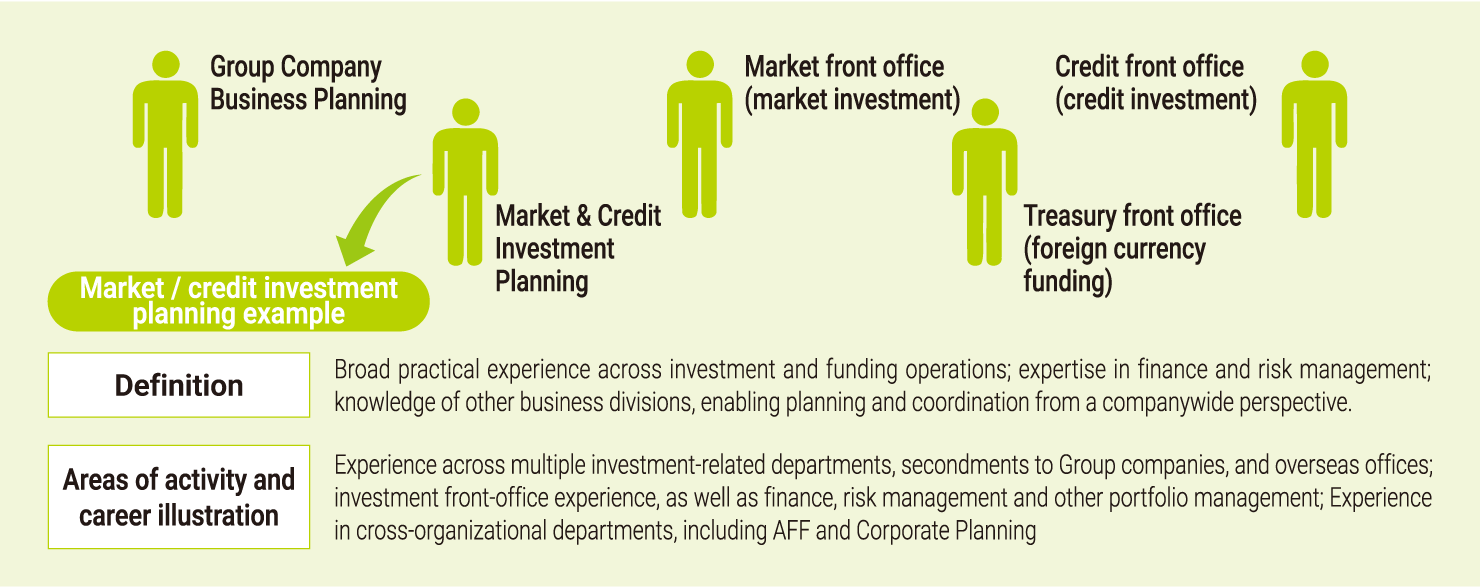
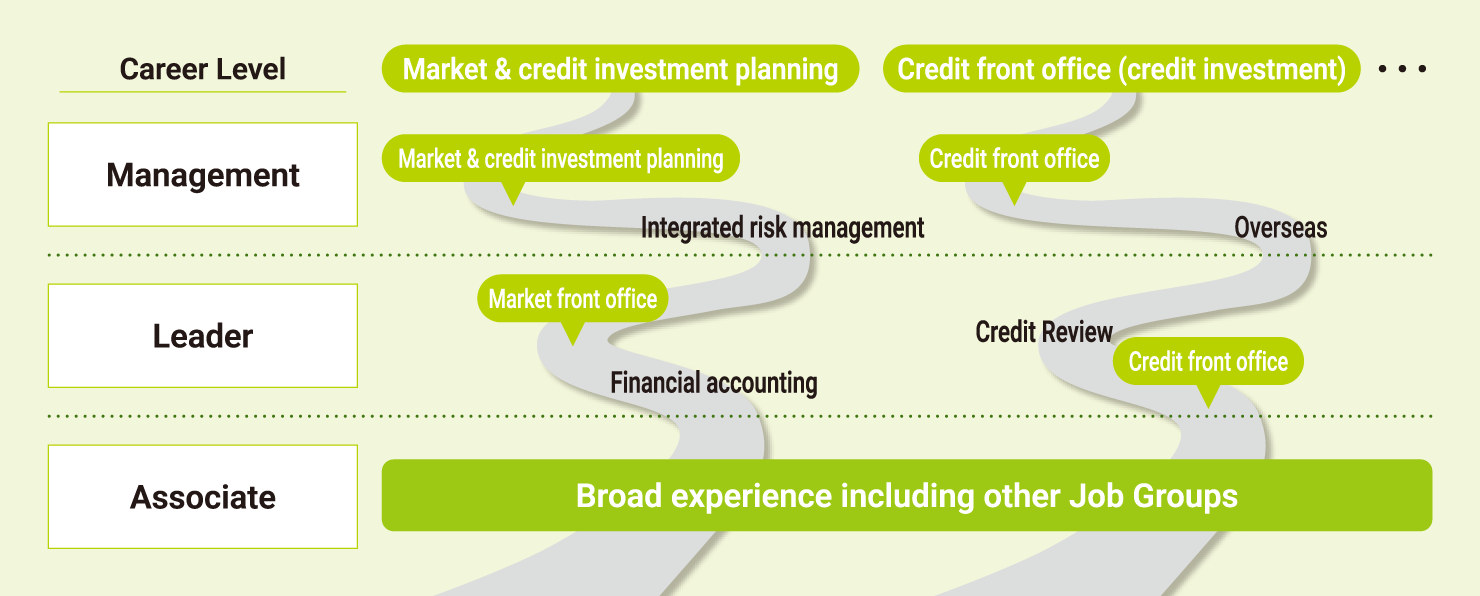
To support employees in autonomous career development and cultivating expertise, the Bank has established a “Target Talent Profile” and “Career Journey” for each job group, presenting examples of talent composition, areas of activity, and career paths, while implementing the human resource development initiatives needed to achieve them.
Target Talent Profile (GI&B Group Examples)
Career Journey (GI&B Group Examples)
Training initiatives unique to each job group (example from GI&B group)

Talent group formation based on Job Groups (Human Resource Portfolio Strategy)
Under its talent portfolio strategy, the Bank seeks to develop the talent groups required to execute its business strategy through the Job Group System. Specifically, the Bank defines the expertise required to achieve its business strategy through Job Competencies and visualizes employees’ expertise through competency assessments. Based on the gaps identified through these assessments, the Bank implements talent development initiatives to close those gaps and develop the required talent groups.
Framework for building talent groups
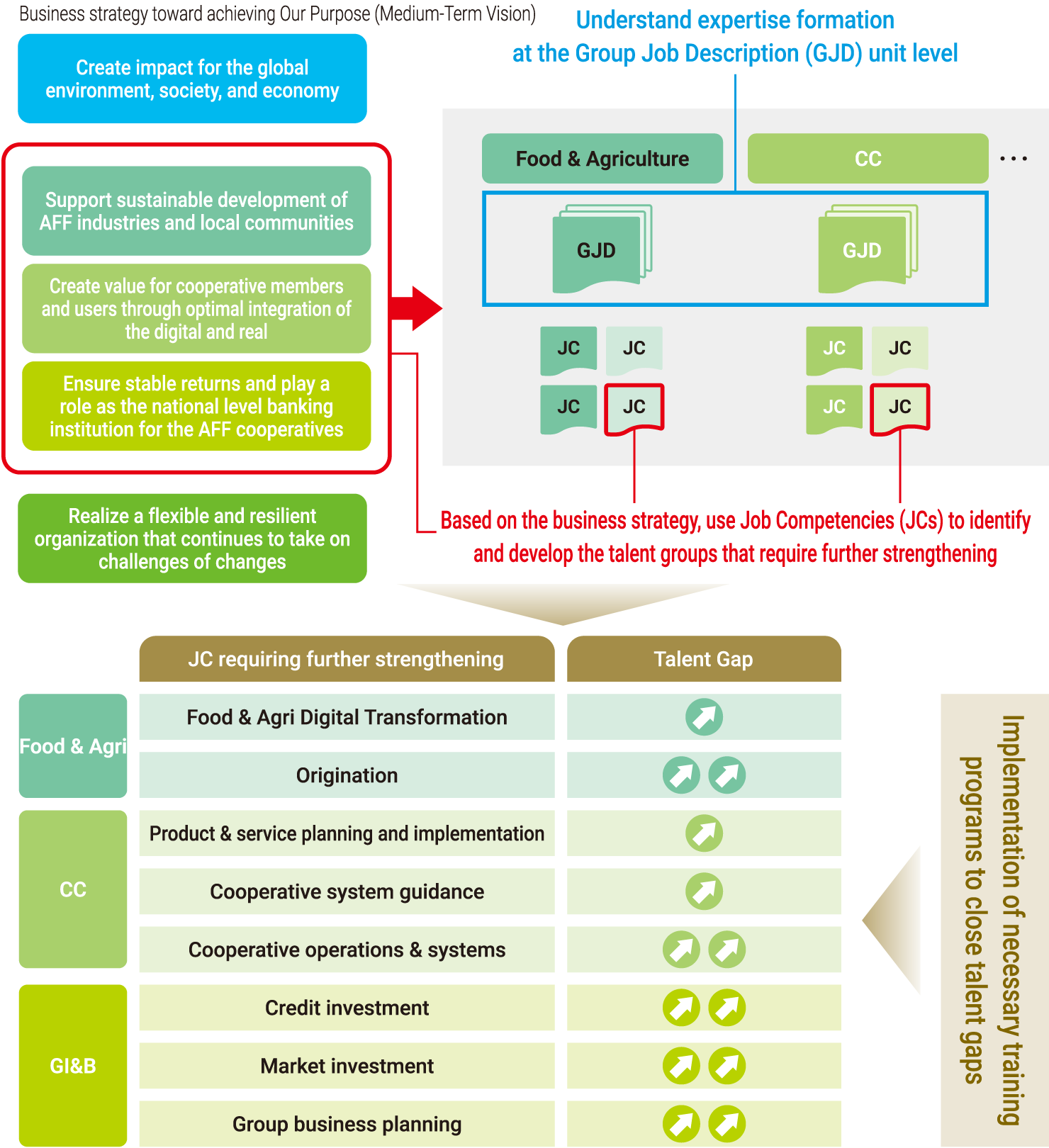
- Note: A greater number of arrows indicates a larger talent gap.
Formation of Cross-Organizational Talent Base
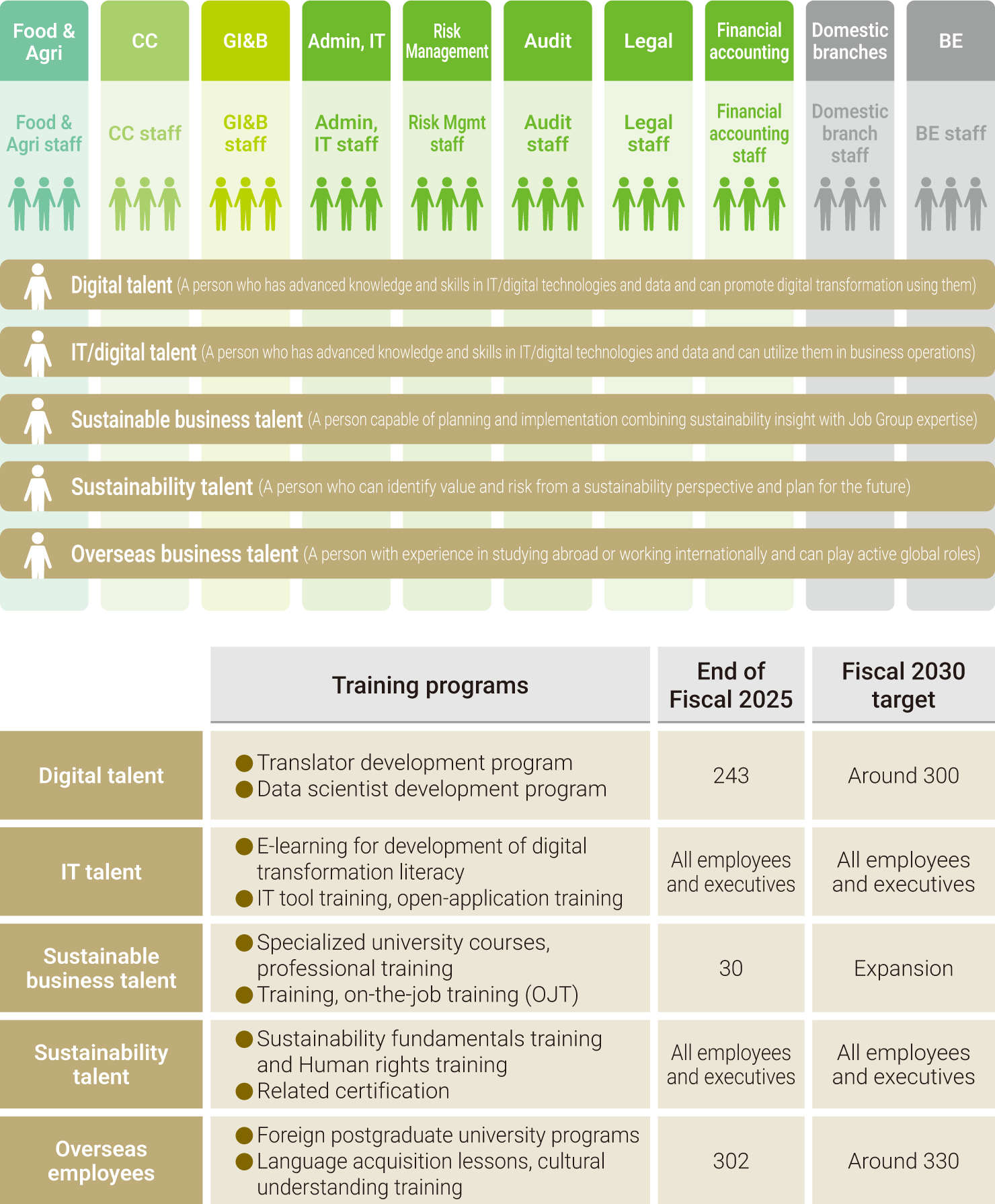
In addition to developing talent groups based on the Job Group System, the Bank is focusing on developing and securing key talent across the organization, including digital talent, while making planned investments in human capital
Cross-Organizational Talent Development Initiatives and Target Headcount
Self-directed career development program
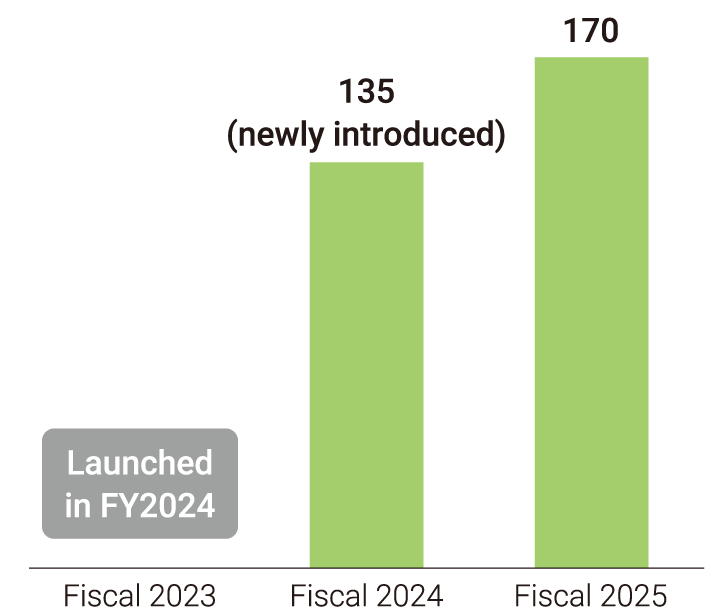
We support employees' self-directed career development regardless of professional course (job class) by providing support for skill enhancement, reskilling, and career self-development.
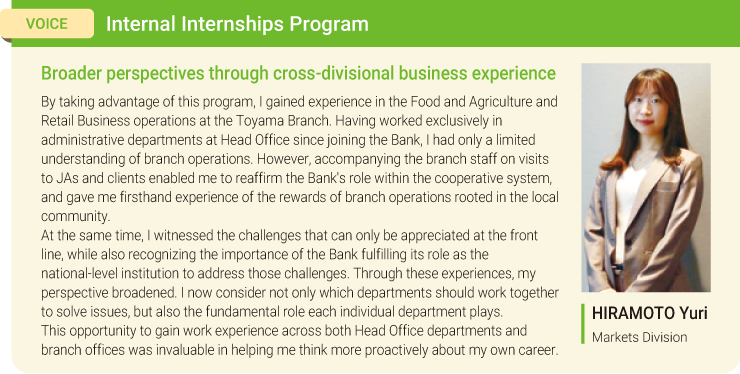
To support autonomous career development and the cultivation of expertise, we operate an Open Recruitment System for Internal Job Positions, which provides opportunities to gain work experience in specific jobs and positions. We also provide opportunities for employees to experience and deepen their understanding of business domains in which they have no prior experience through our Company Internships program.
In addition, to help employees broaden their business experience, we have established a Course Change System for employees wishing to change courses (job class), as well as a Course Challenge Program, which enables employees to gain experience in the business operations of the course to which they wish to transfer.
Open Recruitment System for Internal Job Positions
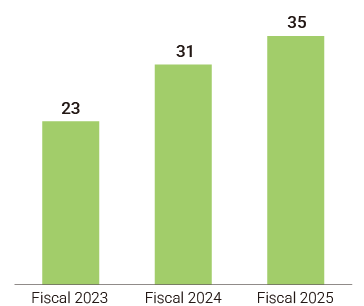
Internal Internships Program
Human resource development
Overview of human resource development
To realize our business strategy, we implement development initiatives centered on three pillars:Cultivating Expertise Within Each Job Group, Developing Cross-Organizational Talent, and Enhancing Human Capital Across the Bank. By investing in human capital and providing diverse learning opportunities, we aim to enable each employee to contribute to the execution and realization of the Bank's strategy with autonomy and expertise.
Structure of the human resource development plan
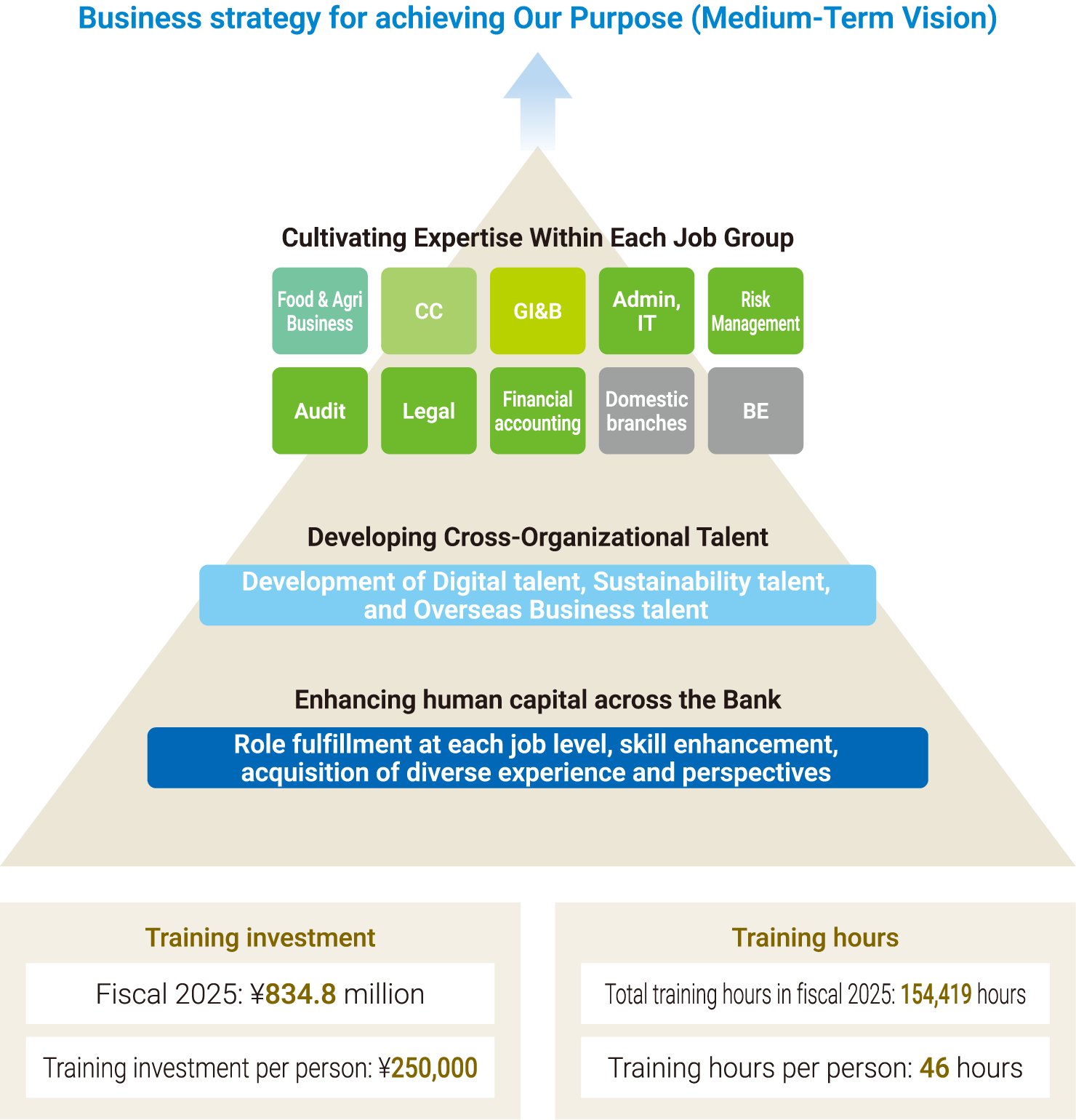
Enhancing Human Capital Across the Bank
As the foundation for cultivating expertise, we implement various human resource development initiatives aimed at enabling employees to fulfill the roles expected at each job level and enhance their skills.
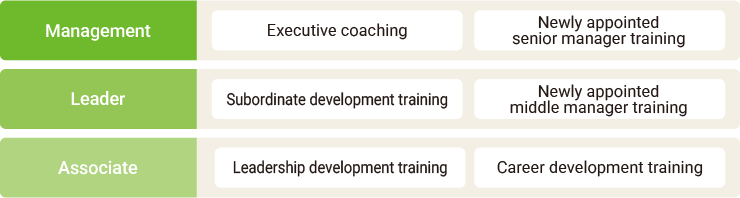
Training by job level and at the time of joining the Bank
For employees in leadership and management positions, we have established training programs designed to develop the leadership and management skills required for training subordinates and managing organizations. For employees at the associate level, we provide training programs that develop the mindset and skills needed for future appointment to leadership positions and for cultivating expertise.
In addition, we offer voluntary skill enhancement and career self-management training programs primarily targeted at each job level.
We also provide the training required at the time of joining the Bank for both new graduate employees and mid-career hires, enabling them to develop the mindset expected of all The Norinchukin Bank employees and to get up to speed smoothly in their new roles.
Main training programs by job level
Main training programs on hiring

Main training programs for skill enhancement and reskilling
We provide training programs and other initiatives that enable employees to grow continuously by enhancing the job performance capabilities (shared competencies) expected of all employees across Job Groups, while supporting self-managed skill enhancement and reskilling.

Encouraging diverse experiences and perspectives
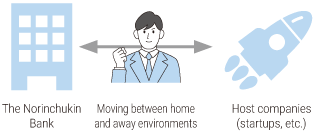
To assemble a group of professionals with diverse ways of thinking and provide opportunities to encounter ideas, values, and work styles that cannot be obtained within the Bank, we are promoting cross-disciplinary training (learning and collaborative value creation together with employees from different industries as well as work experience in fields beyond the scope of one's own organization). In fiscal 2025, 24 employees participated in this program.
Cross-disciplinary training illustration (work experience in different industries)
Development of Management Talent
To continuously secure personnel capable of managing the Bank, we have identified succession positions and established a framework for personnel development and placement based on the job requirements and experience needed for each position. The development is built on a foundation of broad work experience both within and outside the Bank, and branch and departmental management experience.
In fiscal 2025, we developed talent by dispatching employees to programs for middle and top management organized by business schools in Japan and overseas.
Talent recruitment
Recruitment policies
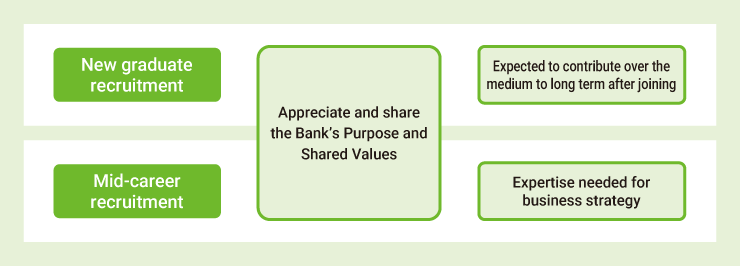
To realize our human resources portfolio strategy, we hire new graduates and mid-career recruits to secure talent with expertise and diversity.
For new graduate recruitment, we recruit individuals who share the Bank's philosophy (Purpose) and can be expected to contribute over the medium to long term with autonomy and expertise. For mid-career recruitment, we focus on securing professionals who can make an immediate contribution and possess the expertise required to achieve our business strategy.
Our Approach to Talent Recruitment
Initiatives to Attract Talent
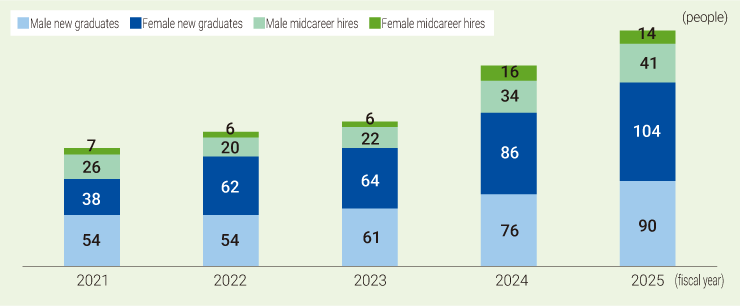
We are working to strengthen our midcareer recruiting effort and increase our hiring quota in order to build a diverse group of highly skilled professionals. We have also established a target of 40% or more female hires among new graduate recruits for career-track positions.
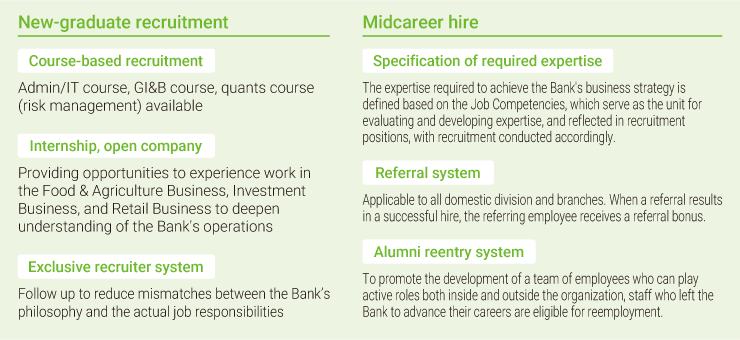
For new graduates, we have introduced a course-based recruitment system that specifies the department of initial assignment for candidates who wish to develop specific expertise. We also hold internships and open company events and have introduced an exclusive recruiter system to reduce recruitment mismatches by fostering a better understanding of the work.
To strengthen midcareer recruiting, we have introduced an employee referral system and are working to clarify and conceptualize the specific expertise required for each open position and help expand recruiting within each business domain.
Recruiting results
Attracting talent
- Sustainability
- Sustainability Management
- Highlights of Initiatives
- Formulation of Purpose of the Bank and Milestones of Sustainable Management
- Philosophies and Policies
- Sustainability Promotion Structure
- Sustainability Advisory Board
- Important Issues to Achieve Our Purpose
- Stakeholder Engagement
- Participation in Initiatives
- Sustainable Finance
- Initiatives for Creating and Visualizing Impact
- Initiatives to Manage Environmental and Social Risks
- Agriculture, Fishery, Forestry Industries, and Regions
- Environment
- Social
- Governance
- Report/Index