
Human Capital Foundation
Raising engagement
Employee engagement survey
At least once a year, the Bank conducts an employee
engagement survey (organizational capability
survey). The results are reported to the Board of
Directors. Effective response measures are
subsequently considered and implemented based on
analysis of the results and identification of issues.
Employee engagement scores are measured
according to three factors: job satisfaction,
motivation to contribute, and willingness to
recommend the Bank to others. We have set a target
score of 65% or higher by fiscal 2030, based on the
assumption that these factors can be raised to the
necessary degree.
Recent survey results indicate an improvement in
employee engagement rooted in our engagement
initiatives, but confirmed room for improvement regarding the dissemination of management
messaging and management policy.
Employee engagement score* trends

- *For each of the three factors above, employees are asked to respond on a five-point scale (strongly agree, agree, neutral, disagree, strongly disagree). The engagement score is calculated as the average percentage of positive responses across the questions.
How survey results are utilized

Ongoing initiatives to enhance engagement
Based on the issues identified through the survey, we examine and implement Bank-wide initiatives. In addition to these Bank-wide initiatives, departments, branches, and other organizational units also implement their own creative initiatives, thereby working to improve engagement across the organization.
Main Bank-wide initiatives
| Main initiatives | Description of fiscal 2025 initiatives |
|---|---|
| Executive Dialogue Sessions | We hold executive seminars in which one executive and a small number of employees engage in dialogue, with the goal of fostering career development awareness among employees, increasing employee engagement, and improving the organization’s culture. In fiscal 2025, a total of 178 seminars were held, with 2,478 employee participants in total. |
| Internal Communications Portal | Through the Group-wide Internal Communications Portal, we share examples of excellent initiatives
undertaken by employees based on our shared values, as well as stories highlighting the diverse talent active
throughout the Norinchukin Group. In fiscal 2025, a total of 74 articles were published on the portal. Taking advantage of the portal's accessibility to all employees, we have enhanced communication by increasing the number of messages from executives and opportunities for executives to answer employees' questions. |
| Strengthening the Communication of Management Messages and Policies | When rolling out the Bank's initiatives (management policy) for fiscal 2026, in addition to comments from executives, we introduced a range of measures to make the policy more familiar and easier for employees to understand, including a short novel-style summary presenting the discussions and deliberations that led to its formulation, and interviews with employees involved in its development. |
| Strengthening IT Infrastructure and digital transformation Initiatives | To improve employee productivity, the working environment, and operational efficiency, we enhanced our
systems environment, upgraded PC terminals, and introduced generative AI and other technologies.
|
| Main initiatives |
|---|
| Executive Dialogue Sessions |
| Description of fiscal 2025 initiatives |
| We hold executive seminars in which one executive and a small number of employees engage in dialogue, with the goal of fostering career development awareness among employees, increasing employee engagement, and improving the organization’s culture. In fiscal 2025, a total of 178 seminars were held, with 2,478 employee participants in total. |
| Main initiatives |
|---|
| Internal Communications Portal |
| Description of fiscal 2025 initiatives |
| Through the Group-wide Internal Communications Portal, we share examples of excellent initiatives undertaken by employees based on our shared values, as well as stories highlighting the diverse talent active throughout the Norinchukin Group. In fiscal 2025, a total of 74 articles were published on the portal. Taking advantage of the portal's accessibility to all employees, we have enhanced communication by increasing the number of messages from executives and opportunities for executives to answer employees' questions. |
| Main initiatives |
|---|
| Strengthening the Communication of Management Messages and Policies |
| Description of fiscal 2025 initiatives |
| When rolling out the Bank's initiatives (management policy) for fiscal 2026, in addition to comments from executives, we introduced a range of measures to make the policy more familiar and easier for employees to understand, including a short novel-style summary presenting the discussions and deliberations that led to its formulation, and interviews with employees involved in its development. |
| Main initiatives |
|---|
| Strengthening IT Infrastructure and digital transformation Initiatives |
| Description of fiscal 2025 initiatives |
To improve employee productivity, the working environment, and operational efficiency, we enhanced our
systems environment, upgraded PC terminals, and introduced generative AI and other technologies.
|
Creative Initiatives by Divisions and Branches
-
Kumamoto Branch
Family Day
We organized a Family Day event to invite employees' families to the branch, where they participated in activities such as a stamp-rally-style branch tour and cash-counting experiences, with the aim of helping them better understand the workplace environment, atmosphere, and the Bank's operations.
As the entire branch worked together from the planning stage through the day of the event, the initiative also helped foster a sense of unity and strengthen employees' sense of belonging.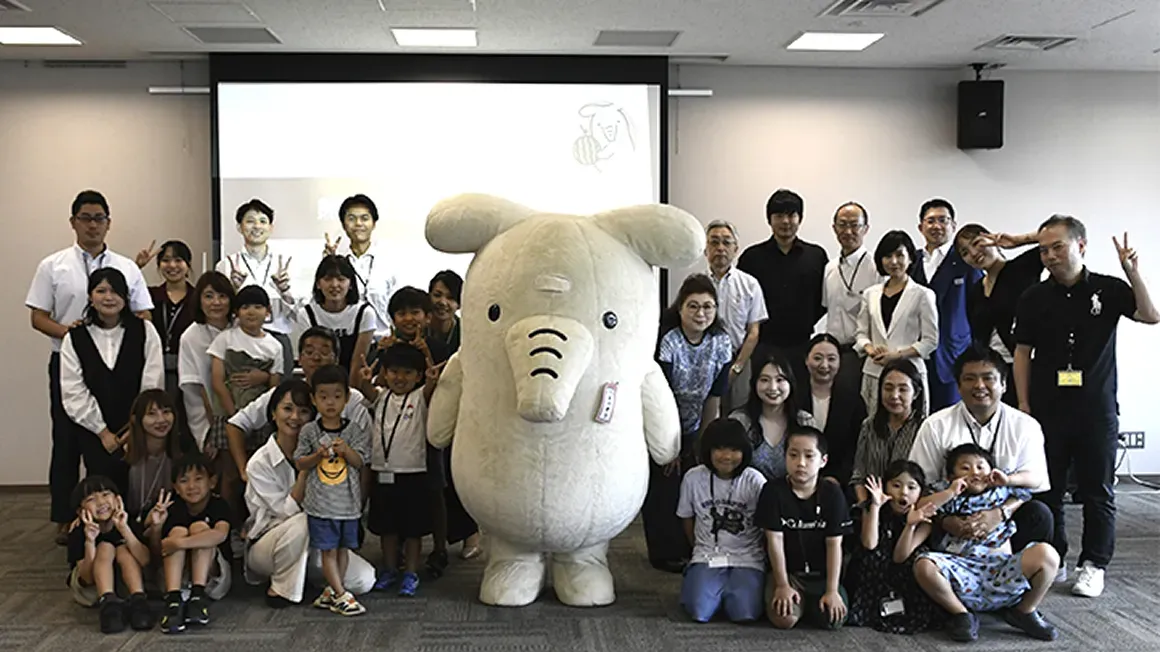
-
Utsunomiya Branch
Thanks Card (Utsunomiya Branch)
Employees write a short message whenever they wish to express their appreciation to a colleague, and the messages are shared at regular intervals.
By making visible contributions and mutual support that are not easily reflected in numerical results, as well as the consideration and thoughtfulness that often go unnoticed in everyday work, the initiative has helped strengthen teamwork and improve the workplace environment.
Encouraging Challenge-Taking
Performance Evaluation System
Employees are assessed through competency evaluations and performance evaluations
Competency evaluations assess both the capabilities expected of all employees regardless of
their duties and the specialized capabilities required for each job and function. The results are
used for employee development and the cultivation of expertise and are also reflected in monthly
salaries.
Performance evaluations are positioned as a management tool that encourages employees to
take on challenges in order to continuously improve the execution of assigned tasks and
objectives and the quality of their results and are reflected in bonuses. In addition, by evaluating
achievements beyond those set out in objectives at the beginning of the evaluation period, the
framework encourages employees' creativity and willingness to take on new challenges.
Structure of the evaluation system

Business Awards
We hold the Business Awards to recognize employees' initiatives and challenges that embody
the Medium-Term Vision of "Taking on challenges of a changing world as we look to the
future," and to share these efforts across the organization. Based on entries submitted either
by employees themselves or through nominations by others, awards are presented at the
headquarters and unit level. The Grand Prize is then selected from among the representative
entries from each headquarters and unit by a selection panel.
The Business Awards were launched in fiscal 2019. In fiscal 2025, 161 entries were submitted,
bringing the cumulative total to 1,825. In addition to attracting a large number of entries each
year, the quality of the initiatives and challenges has continued to improve over time.
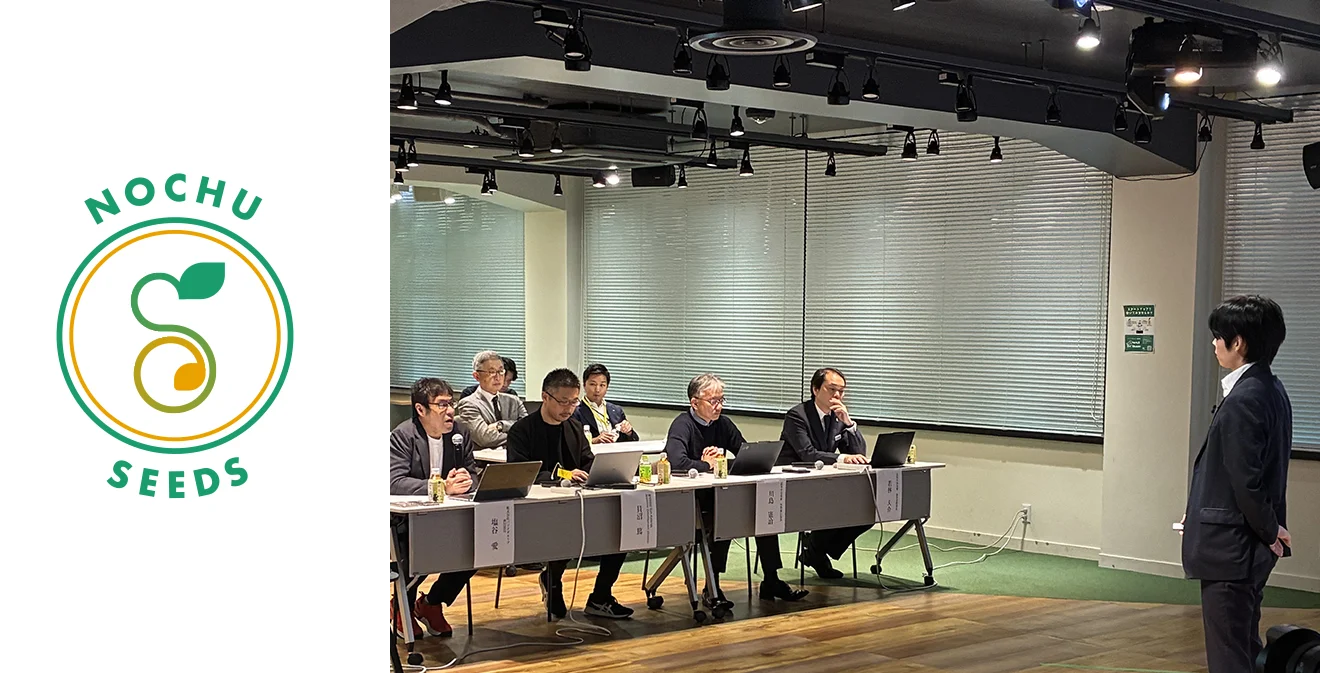
In-house Entrepreneurship System (Nochu Seeds)
To encourage employees to take on new challenges, we launched the in-house entrepreneurship program, "Nochu Seeds," in fiscal 2024. Under this program, employees are invited to submit business ideas, which are refined through mentoring and other support before undergoing multiple rounds of evaluation. The bank selected one idea each for fiscal 2024 and fiscal 2025, and both of ideas are currently under consideration for commercialization
VOICE
In-house Entrepreneurship System (Nochu Seeds)
Owning responsibility and making a business
Ever since my idea was selected, I have been working full time on exploring its commercialization. Throughout the selection process and beyond, I have encountered a number of challenges. Although I have received support from those around me, ultimately I am responsible for both what I have accomplished and what I have not. It is a world completely different from my previous work, where I was supported by my supervisors, and I can feel my approach to work changing day by day. Going forward, I hope to continue advancing the commercialization of the business while further developing the professionalism and sense of responsibility expected of a business owner.
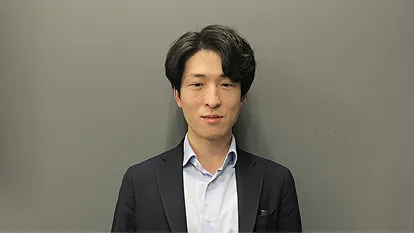
Selected fiscal 2024
Promoting Well-Being
Promoting diverse work styles
We promote an environment in which all employees can choose work styles that fit with their distinctive life events, such as marriage, childbirth, child care, and nursing care, and where each individual can independently pursue a personally tailored career path.

Health Promotion
Employee health management and health promotion are not matters to be left solely to employees' own initiatives, but must be addressed by the Bank as an organization. We have established an environment to support the maintenance and improvement of employee’s health in body and mind through initiatives such as annual health checkups and stress checks, as well as the provision of free gynecological examinations and cervical cancer risk screening kits.
Through these initiatives, we aim to enhance the quality of our human capital and create sustainable corporate value.
| Health Promotion Initiatives | Features of the Bank’s initiatives |
|---|---|
| Annual Health Checkups and Health Screening Subsidies | The annual health checkup participation rate was 99.9%. Subsidies of up to ¥70,000 are provided for comprehensive health screenings. |
| Gynecological Examinations and Cervical Cancer Risk Screening Kits | The Bank fully subsidizes gynecological examinations conducted at medical institutions and cervical cancer risk screening kits (HPV test kits) that can be used at home or elsewhere. |
| Stress Checks and Other Mental Health Initiatives | Stress check results are improving. We also promote the use of external counseling services and raise awareness of mental health issues. |
| Health Newsletter | Publishes information from occupational physicians on physical and mental health, dental and oral health, and related topics. |
Fiscal 2025 Annual Health Checkups – Participation Rate and Breakdown

Stress Check Results

Promoting Annual Leave Utilization
From the perspectives of the balancing “work and childcare” or “work and nursing care,” and promoting various
working styles and diversity, the Bank has set a target of an annual paid leave utilization rate of 70% or higher in its
General Employer Action Plan formulated in accordance with applicable laws and regulations.
We also actively encourage employees to take advantage of the Plus One Leave (one day of annual paid leave
taken in conjunction with a weekend), Mini Consecutive Leave (two or more consecutive days of annual paid
leave), as well as half-day and hourly paid leave.
| FY2023 | FY2024 | FY2025 | Target | |
|---|---|---|---|---|
| Result | 80.6% | 83.2% | 84.3% | 70% |
| FY2023 | |
|---|---|
| Result | 80.6% |
| FY2024 | |
| Result | 83.2% |
| FY2025 | |
| Result | 84.3% |
| Target | |
| Result | 70% |
Promotion of Diversity, Equity, and Inclusion (DE&I)
Our approach to DE&I
We are promoting diversity, equity, and inclusion (DE&I) by fostering a culture in which each individual can demonstrate their expertise and to play an ongoing active role and grow independently.
Through these initiatives, we are building workplaces where diverse and talented employees gather, respect and welcome each other's different perspectives, enjoy the differences, actively accept diverse viewpoints and thoughts, and openly and actively exchange ideas and opinions in a psychologically safe environment. Thus, we ensure the continuous invention and implementation of new ideas and approaches that further strengthen our organization.
Advancement of Women
The Bank is committed to advancing women's participation by promoting equal opportunities through measures such as expanding training opportunities, creating an environment that supports diverse and flexible working styles, and fostering changes in awareness and behavior across the organization. In addition, from the perspective of supporting women's return to work, we are also promoting the use of childcare leave by male employees.
Ratio of Women in Management Positions
| FY2023 | FY2024 | FY2025 |
|---|---|---|
| 9.1% | 9.6% | 9.5% |
| FY2030 | FY2040 |
|---|---|
| 13% | 30% |
Male childcare leave utilization rate
| FY2023 | FY2024 | FY2025 |
|---|---|---|
| 97% | 108% | 114% |
| 100% |
- *Utilization rate in all fiscal years was 100% if excluding cases where leave was taken either side of the fiscal year end
Advancement of Women

Childcare and Nursing Care
The Bank is committed to supporting its employees in balancing their work and childcare responsibilities, as well as achieving a healthy work-life balance. To this end, we are enhancing our systems for infertility treatment leave, shorter working hours for childcare, and various programs for those taking maternity and childcare leave. We have also partnered with employer-led childcare facilities, and we have received certification as a Childcare Support Company (Platinum Kurumin Plus) from the Minister of Health, Labour and Welfare.
Leave Programs and Training Opportunities for Life Events and Other Needs

Promoting Diverse Talent
We also promote the following initiatives to ensure the Bank is an organization where each employee can perform a personally authentic and active role in line with our broader themes related to DEI promotion and social issues.
- Active Participation by People with Disabilities
-
- Video-based and correspondence training to promote understanding
- Introduction of speech recognition software
- Establishment of a consultation desk for employees with disabilities
- Supporting Global Talent
-
- Promotion of local hiring at overseas offices
- Supporting global talent through appointments to management and executive positions at overseas offices
- Enhancing organizational management through the global perspectives of locally hired employees at overseas offices
- Promoting Understanding of LGBTQ+
-
- Internal communications and CDO participation in various events
- Awareness-raising activities, including executives' endorsement of the "PRIDE1000" initiative
- Promoting understanding through video-based training and e-learning
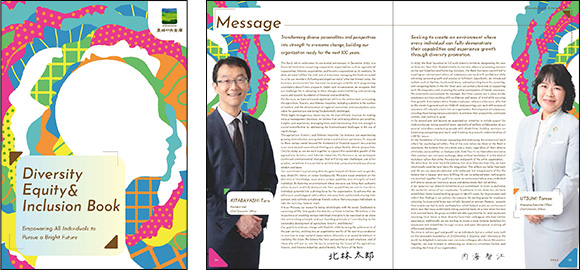
Diversity, Equity & Inclusion Book
Since 2022, when our Diversity Year One began, the Bank has been committing and promoting various dimensions of diversity—such as promoting women's empowerment, inclusivity, disability status, senior employee, nationality and LGBTQ+. This DE&I book introduces such wide range of efforts in a lively manner. Our DE&I initiatives embody our aspirations for an active workforce and our corporate evolution.
- ※ The initiatives introduced below in this section are applicable only in Japan, not applicable in other countries, nor are they applicable to the Bank’s employees working at offices and subsidiaries located outside of Japan. With respect to DE&I associated statistics and quotas, they do not include employees who are hired locally outside of Japan.